São Paulo
| São Paulo | |||
| — Municipality — | |||
| Municipality of São Paulo Município de São Paulo |
|||
 |
|||
|
|||
| Nickname: Sampa; Selva de Pedra (Concrete Jungle); Terra da Garoa (Drizzle Land); "Pauliceia Desvairada" (Crazy Pauliceia) | |||
| Motto: "Non ducor, duco" (Latin) "I am not led, I lead" |
|||
| Country | Brazil | ||
|---|---|---|---|
| Region | Southeast | ||
| State | São Paulo | ||
| Founded | January 25, 1554 | ||
| Founder | Manuel da Nóbrega and Joseph of Anchieta | ||
| Named for | Paul the Apostle | ||
| Government | |||
| - Type | Mayor–council | ||
| - Mayor | Ricardo Nunes (MDB) | ||
| - Vice Mayor | Mello Araújo | ||
| Area | |||
| - Municipality | 1,521.20 km² (587.34 sq mi) | ||
| - Urban | 11,698 km² (4,517 sq mi) | ||
| - Metro | 7,946.96 km² (3,068.34 sq mi) | ||
| - Macrometropolis | 53,369.61 km² (20,606.12 sq mi) | ||
| Elevation | 760 m (2,500 ft) | ||
| Population (2025)[1] | |||
| - Municipality | 11,904,961 | ||
| - Density | 7,819.86/km² (20,253.3/sq mi) | ||
| - Metro | 21,518,955 (Greater São Paulo) | ||
| - Metro Density | 2,714.45/km² (7,030.4/sq mi) | ||
| - Macrometropolis (Extended Metro) | 34,500,000 | ||
| Time zone | BRT (UTC– 03:00) | ||
| Postal Code (CEP) | 01000-000 | ||
| Area code(s) | +55 11 | ||
| Website: capital.sp.gov.br | |||


São Paulo (/ˌsaʊ(m) ˈpaʊloʊ/; Portuguese: [sɐ̃w ˈpawlu]; Portuguese for 'Saint Paul') is the capital city of the state of the same name, as well as the most populous city in Brazil, South America, the Americas, and in both the Western and Southern Hemispheres. The city exerts international influence in commerce, finance, culture, gastronomy, arts, fashion, technology, entertainment and media. It is the most populous Portuguese-speaking city in the world. The city's name "São Paulo" honors Paul the Apostle and people from the city are known as paulistanos.
Founded in 1554 by Jesuit priests, São Paulo is one of the oldest continuously inhabited cities on the American continent. It played a strategic role during the Brazilian colonial period, serving as the center and starting point for the expeditions of the Paulista bandeirantes (pioneers) settlers for the territorial and economic expansion of the country; however, its economic opulence was consolidated during the Brazilian coffee cycle in the mid-nineteenth century. From that period onward, it became the stage for landmark events in Brazilian history, such as the Cry of Ipiranga, the Modern Art Week, the 1932 Revolution, and the Diretas Já (Direct Elections Now) movement. In the twentieth century, it consolidated its role as the main national economic hub with industrialization in Brazil, which made the city a cosmopolitan melting pot, home to the largest Arab, Italian, and Japanese diasporas in the world, with ethnic neighborhoods like Bixiga, Bom Retiro, and Liberdade, and people from more than 200 other countries.
History
Pre-colonial period
The region of modern-day São Paulo, originally known as Piratininga plains around the Tietê River, was inhabited by the Tupi people, such as the Tupiniquim, Guaianás, and Guarani. Other tribes also lived in areas that today form the metropolitan region.[2]
The region was divided in Caciquedoms (chiefdoms) at the time of encounter with the Europeans.[3] The most notable cacique was Tibiriçá, known for his support for the Portuguese and other European colonists. Among the many indigenous names of places, rivers, and neighborhoods that survive today are Tietê, Ipiranga, Tamanduateí, Anhangabaú, Piratininga, Itaquaquecetuba, Cotia, Itapevi, Barueri, and Embu-Guaçu.
Colonial period


The Portuguese village of São Paulo dos Campos de Piratininga was marked by the founding of the Colégio de São Paulo de Piratininga on 25 January 1554. The Jesuit college of twelve priests included Manuel da Nóbrega and Spanish priest José de Anchieta. They built a mission on top of a steep hill between the Anhangabaú and Tamanduateí rivers. On January 25, 1554 the village was formally founded when the priests celebrated the inaugural mass of the Jesuit school. [4]
They first had a small structure built of rammed earth, made by Native Indian workers in their traditional style. The priests wanted to evangelize these Indians who lived in the Plateau region of Piratininga and convert them to Christianity. The site was separated from the coast by the Serra do Mar mountain range, called "Serra Paranapiacaba" by the Indians. The college was named for a Christian saint and its founding on the feast day of the celebration of the conversion of the Apostle Paul of Tarsus.
For the next two centuries, São Paulo developed as a poor and isolated village that survived largely through the cultivation of subsistence crops by the labor of natives. For a long time, São Paulo was the only colonial village in Brazil's interior, as travel was too difficult for many to reach the area. Mem de Sá forbade colonists to use the Caminho do Piraquê (Piraquê Path) and today known as Piaçaguera, because of frequent Indian raids along it.
On March 22, 1681, Luís Álvares de Castro, the Second Marquis de Cascais and donee of the Captaincy of São Vicente, moved the capital to the village of São Paulo, designating it the "Head of the captaincy". The new capital was established on April 23, 1683, with public celebrations.
The Bandeirantes

In the seventeenth century, São Paulo was one of the poorest regions of the Portuguese colony. It was also the center of interior colonial development. Because they were extremely poor, the Paulistas could not afford to buy African slaves, as did other Portuguese colonists. The discovery of gold in the region of Minas Gerais, in the 1690s, brought attention and new settlers to São Paulo. The Captaincy of São Paulo and Minas de Ouro was created on November 3, 1709, when the Portuguese crown purchased the Captaincies of São Paulo and Santo Amaro from the former grantees.
Conveniently located in the country, up the steep Serra do Mar escarpment/mountain range when traveling from Santos, while also not too far from the coastline, São Paulo became a safe place to stay for tired travelers. The town became a center for the bandeirantes, intrepid invaders who marched into unknown lands in search for gold, diamonds, precious stones, and Indians to enslave. The bandeirantes, which could be translated as "flag-bearers" or "flag-followers", organized excursions into the land with the primary purpose of profit and the expansion of territory for the Portuguese crown. Trade grew from the local markets and from providing food and accommodation for explorers. The bandeirantes eventually became politically powerful as a group, and forced the expulsion of the Jesuits from the city of São Paulo in 1640. The two groups had frequently come into conflict because of the Jesuits' opposition to the domestic slave trade in Indians.

On July 11, 1711, the town of São Paulo was elevated to city status. Around the 1720s, gold was found by the pioneers in the regions near what are now Cuiabá and Goiânia. The Portuguese expanded their Brazilian territory beyond the Tordesillas Line to incorporate the gold regions. When the gold ran out in the late eighteenth century, São Paulo shifted to growing sugar cane. Cultivation of this commodity crop spread through the interior of the Captaincy. The sugar was exported through the Port of Santos. At that time, the first modern highway between São Paulo and the coast was constructed and named the Calçada do Lorena ("Lorena's settway"). Nowadays, the estate that is home to the Governor of the State of São Paulo, in the city of São Paulo, is called the Palácio dos Bandeirantes (Bandeirantes Palace), in the neighborhood of Morumbi.
Imperial period


After Brazil became independent from Portugal in 1822, as declared by Emperor Pedro I where the Monument to the Independence of Brazil is located, he named São Paulo as an Imperial City. In 1827, a law school was founded at the Convent of São Francisco, today part of the University of São Paulo. The influx of students and teachers gave a new impetus to the city's growth, thanks to which the city became the Imperial City and Borough of Students of St. Paul of Piratininga.
The expansion of coffee production was a major factor in the growth of São Paulo, as it became the region's chief export crop and yielded good revenue. It was cultivated initially in the Paraíba Valley region in the East of the State of São Paulo, and later on in the regions of Campinas, Rio Claro, São Carlos and Ribeirão Preto.
From 1869 onward, São Paulo was connected to the port of Santos by the Estrada de Ferro Santos-Jundiaí (Santos-Jundiaí Railroad), nicknamed The Lady. By the late nineteenth century, several other railroads connected the interior to the state capital. São Paulo became the point of convergence of all railroads from the interior of the state. Coffee was the economic engine for major economic and population growth in the State of São Paulo.
In 1888, the "Golden Law" (Lei Áurea) was sanctioned by Isabel, Princess Imperial of Brazil, abolishing slavery in Brazil. Until then, enslaved had been the main source of labor in the coffee plantations. After abolition, and following governmental stimulus towards the increase of immigration, the province began to receive a large number of immigrants, largely Italians, Japanese, and Portuguese peasants, many of whom settled in the capital. The region's first industries also began to emerge, providing jobs to the newcomers, especially those who had to learn Portuguese.
Old Republican period


By the time Brazil became a republic on November 15, 1889, coffee exports were still an important part of São Paulo's economy. São Paulo grew strong in the national political scene, taking turns with the also rich state of Minas Gerais in electing Brazilian presidents, an alliance that became known as "coffee and milk," given that Minas Gerais was famous for its dairy production. During this period, São Paulo went from regional center to national metropolis, becoming industrialized and reaching its first million inhabitants in 1928. Its greatest growth in this period was relative in the 1890s when it doubled its population. The height of the coffee period is represented by the construction of the second Luz Station (the present building) at the end of the nineteenth century and by the Paulista Avenue in 1900, where they built many mansions.
Industrialization was the economic cycle that followed the coffee plantation model. By the hands of some industrious families, including many immigrants of Italian and Jewish origin, factories began to arise and São Paulo became known for its smoky, foggy air. The cultural scene followed modernist and naturalist tendencies in fashion at the beginning of the twentieth century. The Modern Art Week of 1922 that took place at the Theatro Municipal was an event marked by avant-garde ideas and works of art. In 1929, São Paulo won its first skyscraper, the Martinelli Building.
The modifications made in the city by Antônio da Silva Prado, Baron of Duprat and Washington Luís, who governed from 1899 to 1919, contributed to the development of the city; some scholars consider that the entire city was demolished and rebuilt at that time. São Paulo's main economic activities came to derive from the services industry; factories were gone, and in came financial services institutions, law firms, and consulting firms. Old factory buildings and warehouses still dot the landscape in neighborhoods such as Barra Funda and Brás. Some cities around São Paulo, such as Diadema, São Bernardo do Campo, Santo André, and Cubatão are still heavily industrialized to the present day, with factories producing various items from cosmetics to chemicals to automobiles.
In 1924 the city was the stage of the São Paulo Revolt, an armed conflict fought in working-class neighborhoods near the center of São Paulo that lasted 23 days, from July 5 to 28, leaving hundreds dead and thousands injured. The confrontation between the federal troops of president Artur Bernardes against rebels of the Brazilian Army and the Public Force of São Paulo was classified by the federal government as a conspiracy and a mutiny, a revolt led by members of the Brazilian Army. To face the rebels, the federal government launched an indiscriminate artillery bombardment against the city, which affected mostly civilian targets; as a result of the bombing, a third of São Paulo's 700,000 inhabitants fled the city. The revolt has been described as "the largest urban conflict in the history of Brazil."[5]
More recent times


In 1932, São Paulo mobilized in its largest civic movement: the Constitutionalist Revolution, when the entire population engaged in the war against the "Provisional Government" of Getúlio Vargas. In 1934, with the reunion of some faculties created in the nineteenth century, the University of São Paulo (USP) was founded, today the largest in Brazil.
Another major industrial boom occurred during the Second World War, due to the crisis in coffee farming in the 1930s and restrictions on international trade during the war, which resulted in the city having a very high economic growth rate that remained high in the post-war period.
In 1947, São Paulo gained its first paved highway: the Via Anchieta (built on the old route of José de Anchieta), connecting the capital to the coast of São Paulo. With the transfer of part of the city's financial center, which was located in the historic center (in the region called the "Historic Triangle"), to Paulista Avenue, its mansions were, for the most part, replaced by large buildings.
In the period from the 1930s to the 1960s, the great entrepreneurs of São Paulo's development were mayor Francisco Prestes Maia and the governor Ademar de Barros, who was also mayor of São Paulo between 1957 and 1961. Prestes Maia designed and implemented, in the 1930s, the "Avenue Plan for the City of São Paulo," which revolutionized São Paulo's traffic. These two rulers are also responsible for the two biggest urban interventions, after the Avenues Plan, which changed São Paulo: the rectification of the Tietê river with the construction of its banks and the São Paulo Metro: on February 13, 1963, governor Ademar de Barros and mayor Prestes Maia created study commissions (state and municipal) to prepare the basic project for the São Paulo Metro, and allocated their first funds to the Metro.
At the beginning of the 1960s, São Paulo already had four million inhabitants. Construction of the metro began in 1968, under the administration of Mayor José Vicente de Faria Lima, and the commercial operation started on September 14, 1974. In 2016 the system had a network 71.5 km long and 64 stations spread across five lines.
By the end of the twentieth century and beginning of the twenty-first century, São Paulo became the main financial center in South America and one of the most populous cities in the world.

Geography
.JPG)
São Paulo is the capital of the most populous state in Brazil, São Paulo, located at latitude 23°33'01'' south and longitude 46°38'02'' west. The city is on a plateau placed beyond the Serra do Mar (Portuguese for "Sea Range" or "Coastal Range"), itself a component of the vast region known as the Brazilian Highlands, with an average elevation of around 799 meters (2,620 ft) above sea level, although at a distance of only about 70 kilometers (43 mi) from the Atlantic Ocean. The distance is covered by two highways, the Anchieta and the Imigrantes, that roll down the range, leading to the port city of Santos and the beach resort of Guarujá. Rolling terrain prevails within the urbanized areas of São Paulo except in its northern area, where the Serra da Cantareira Range reaches a higher elevation and a sizable remnant of the Atlantic Rain Forest.
Hydrography


The Tietê River and its tributary, the Pinheiros River, were once important sources of fresh water and leisure for São Paulo. However, heavy industrial effluents and wastewater discharges in the later twentieth century caused the rivers to become heavily polluted. A substantial clean-up program for both rivers is underway.[6][7] Neither river is navigable in the stretch that flows through the city, although water transportation becomes increasingly important on the Tietê river further downstream (near river Paraná), as the river is part of the River Plate basin.
No large natural lakes exist in the region, but the Billings and Guarapiranga reservoirs in the city's southern outskirts are used for power generation, water storage and leisure activities, such as sailing. The original flora consisted mainly of broadleaf evergreens. Non-native species are common, as the mild climate and abundant rainfall permit a multitude of subtropical and temperate plants to be cultivated, especially the ubiquitous eucalyptus.
The north of the municipality contains part of the 7,917 hectares (19,560 acres) Cantareira State Park, created in 1962, which protects a large part of the metropolitan São Paulo water supply.
Parks and biodiversity

.jpg)
São Paulo is located in an ecotone area between 3 biomes: mixed ombrophilous forest, dense ombrophilous forest and cerrado; the latter had some plant species native to the pampas in the city. There were several species typical of both biomes including: araucarias, pitangueiras, cambucís, ipês, jabuticabeiras, queen palms, and muricís-do-campo.[8]
São Paulo has over 60 municipal and state parks, such as the Cantareira State Park, part of the São Paulo Green Belt Biosphere Reserve and home to one of the largest urban forests on the planet, the Fontes do Ipiranga State Park, the Ibirapuera Park, the Tietê Ecological Park, the Capivari-Monos Environmental Protection Area, the Serra do Mar State Park, Villa-Lobos State Park, People's Park, and the Jaraguá State Park, listed as a World Heritage Site by UNESCO in 1994.[9]
In the municipality it is possible to observe forest birds that usually appear in the spring, due to the belt of native forest that still surrounds the metropolitan region. Species such as the rufous-bellied thrush, golden-chevroned tanager, great kiskadee, and hummingbird are the most common. Despite the intense pollution, the main rivers of the city, the Tietê and the Pinheiros, shelter several species of animals such as capybaras, hawks, southern lapwings, herons, and nutrias. Other species found in the municipality include the gray brocket, howler monkey, green-billed toucan, and the Amazonian umbrellabird.
Environment

.jpg)
In addition to pollution, both air and in the rivers, the problem of balanced water supply for the city – and for the metropolis, in general – is also a worrying issue: São Paulo has few sources of water in its own perimeter, having to seek it in distant hydrographic basins. The problem of water pollution is also aggravated by the irregular occupation of watershed areas, caused by urban expansion, driven by the difficulty of access to land and housing in central areas by the low-income population and associated with real estate speculation and precariousness in new subdivisions. With this, there is also an overvaluation of individual transport over public transport.
Climate

São Paulo features a humid subtropical climate (Köppen: Cwa, Trewartha: Cwal).[10] In summer (January through March), the mean low temperature is about 19 °C (66 °F) and the mean high temperatures is near 28 °C (82 °F). In winter, temperatures tend to range between 12 and 22°C (54 and 72°F).
The Tropic of Capricorn, at about 23°27' S, passes through north of São Paulo and roughly marks the boundary between the tropical and temperate areas of South America. Because of its elevation, however, São Paulo experiences a more temperate climate. The summer is hot and rainy. Autumn and spring are transitional seasons. Winter is mild, but still the coldest season, with cloudiness around town and frequent polar air masses. Frosts occur sporadically in regions further away from the center, in some winters throughout the city.
Rainfall is abundant, annually averaging 1,658 millimeters (65.3 in). It is especially common in the warmer months averaging 292 millimeters (11.5 in) in January and decreases in winter, averaging 32 millimeters (1.3 in). During late winter, especially August, the city experiences the phenomenon known as "veranico" or "verãozinho" ("little summer"), which consists of hot and dry weather, sometimes reaching temperatures well above 28 °C (82 °F). On the other hand, relatively cool days during summer are fairly common when persistent winds blow from the ocean. On such occasions daily high temperatures may not surpass 20 °C (68 °F), accompanied by lows often below 15 °C (59 °F), however, spring and summer can be extremely hot when a heat wave hits the city followed by temperatures around 34 °C (93 °F), but in places with greater skyscraper density and less tree cover, the temperature can feel like 39 °C (102 °F), as on Paulista Avenue for example.
Demographics
The city's metropolitan area, Greater São Paulo, is home to more than 20 million inhabitants and ranks as the most populous in Brazil and one of the most populous in the world. The process of conurbation between the metropolitan areas around Greater São Paulo also created the São Paulo Macrometropolis, the first megalopolis in the Southern Hemisphere, with more than 30 million inhabitants.
São Paulo's population grew rapidly. By 1960 it had surpassed that of Rio de Janeiro, making it Brazil's most populous city. By this time, the urbanized area of São Paulo had extended beyond the boundaries of the municipality proper into neighboring municipalities, making it a metropolitan area with a population of 4.6 million. Population growth continued since 1960, although the rate of growth slowed. By 2013, São Paulo was the most populous city in Brazil and in South America.
Portuguese remains the most widely spoken language and São Paulo is the largest city in the Portuguese speaking world.
Immigration and migration


São Paulo is considered the most multicultural city in Brazil. From 1870 to 2010, approximately 2.3 million immigrants arrived in the state, from all parts of the world.
The Portuguese community not surprisingly is the largest. From the beginning, the Portuguese formed the root and foundation of Brazil, as they installed the Portuguese language, culture, the Catholic religion, laws, government bodies, courts, educational institutions, etc, in Brazil.
The Italian community is one of the strongest, with a presence throughout the city. São Paulo has more descendants of Italians than any Italian city (the largest city of Italy is Rome, with less than 3 million inhabitants). In the early twentieth century, Italian and its dialects were spoken almost as much as Portuguese in the city, which influenced the formation of the São Paulo dialect of today. Even today, Italians are grouped in neighborhoods like Bixiga, Brás, and Mooca to promote celebrations and festivals.
From the nineteenth century through the first half of the twentieth century, São Paulo also received German immigrants (in the current neighborhood of Santo Amaro), Spanish and Lithuanian (in the neighborhood Vila Zelina).
São Paulo also is home of the largest Japanese community outside Japan. In 1958 the census counted 120,000 Japanese in the city and by 1987, there were 326,000 with another 170,000 in the surrounding areas within São Paulo state. By 2007, the Paulistano Japanese population outnumbered their fellow diaspora in the entirety of Peru, and in all individual American cities.[11]
Jewish immigrants in São Paulo are concentrated mainly in Higienópolis and Bom Retiro.
São Paulo has also received waves of immigration from Haiti and from many countries of Africa and the Caribbean. Those immigrants are mainly concentrated in Praça da Sé, Glicério, and Vale do Anhangabaú in the Central Zone of São Paulo.
Since the nineteenth century people began migrating from northeastern Brazil into São Paulo. This migration grew enormously in the 1930s and remained huge in the next decades. The concentration of land, modernization in rural areas, changes in work relationships and cycles of droughts stimulated migration. The largest concentration of northeastern migrants was found in the area of Sé/Brás (districts of Brás, Bom Retiro, Cambuci, Pari, and Sé).
Religion
Like the cultural variety in São Paulo, there are several religions present in the city. Although it has developed on an eminently Catholic social matrix, both due to colonization and immigration – and even today most of the people of São Paulo declare themselves Roman Catholic – it is possible to find in the city dozens of different Protestant denominations, as well as the practice of Islam, Spiritism, Buddhism, and Eastern religions. It is estimated that there are more than one hundred thousand Buddhist and Hindu followers each. Also with a considerable presence are Judaism, Mormonism, and Afro-Brazilian religions.
The Catholic Church divides the territory of the municipality of São Paulo into four ecclesiastical circumscriptions: the Archdiocese of São Paulo, and the adjacent Diocese of Santo Amaro, the Diocese of São Miguel Paulista, and the Diocese of Campo Limpo, the last three suffragans of the first. The archive of the archdiocese, called the Metropolitan Archival Dom Duarte Leopoldo e Silva, in the Ipiranga neighborhood, holds one of the most important documentary heritage in Brazil. The archiepiscopal is the Metropolitan Cathedral of São Paulo (known as Sé Cathedral), in Praça da Sé, considered one of the five largest Gothic temples in the world. The Catholic Church recognizes as patron saints of the city Saint Paul of Tarsus and Our Lady of Penha of France.[12]
The city has the most diverse Protestant or Reformed creeds, such as the Evangelical Community of Our Land, Maranatha Christian Church, Lutheran Church, Presbyterian Church, Methodist Church, Anglican Episcopal Church, Baptist churches, Assemblies of God in Brazil (the largest evangelical church in the country), The Seventh-day Adventist Church, the World Church of God's Power, the Universal Church of the Kingdom of God, the Christian Congregation in Brazil, as well as Christians of various other denominations.
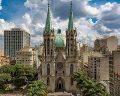
São Paulo Metropolitan Cathedral
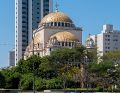
Orthodox Cathedral of São Paulo
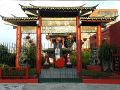
Buddhist Lohan Temple, Liberdade
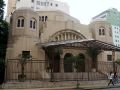
Beth El Synagogue
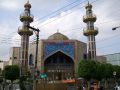
Brás mosque

.jpg)


Languages
The primary language is Portuguese. The general language from São Paulo General, or Tupi Austral (Southern Tupi), was the Tupi-based trade language of what is now São Vicente, São Paulo, and the upper Tietê River. In the seventeenth century it was widely spoken in São Paulo and spread to neighboring regions while in Brazil. From 1750 on, following orders from Marquess of Pombal, Portuguese language was introduced through immigration and consequently taught to children in schools. The original Tupi Austral language subsequently lost ground to Portuguese, and eventually became extinct. Due to the large influx of Japanese, German, Spanish, Italian, and Arab immigrants and others, the Portuguese idiom spoken in the metropolitan area of São Paulo reflects influences from those languages.
The Italian influence in São Paulo accents is evident in the Italian neighborhoods such as Bela Vista, Mooca, Brás, and Lapa. Italian mingled with Portuguese and was assimilated or disappeared into spoken language.
Other languages spoken in the city are mainly among the Asian community: São Paulo is home to the largest Japanese population outside Japan. Although today most Japanese-Brazilians speak only Portuguese, some of them are still fluent in Japanese. Some people of Chinese and Korean descent are still able to speak their ancestral languages. In some areas it is still possible to find descendants of immigrants who speak German (especially in the area of Brooklin paulista) and Lithuanian or Russian or other East European languages (especially in the area of Vila Zelina).
Sexual diversity
The Greater São Paulo is home to a prominent self-identifying gay, bisexual, and transgender community. Same-sex civil unions have been legal in the whole country since May 5, 2011, while same-sex marriage was legalized in São Paulo on December 18, 2012. Since 1997, the city has hosted the annual São Paulo Gay Pride Parade.
Education
São Paulo has public and private primary and secondary schools and vocational-technical schools. More than nine-tenths of the population are literate and roughly the same proportion of those age 7 to 14 are enrolled in school. There are 578 universities in the state of São Paulo.
The city of São Paulo is also home to research and development facilities and attracts companies due to the presence of regionally renowned universities. Science, technology, and innovation is leveraged by the allocation of funds from the state government, mainly carried out by means of the Foundation to Research Support in the State of São Paulo (Fundação de Amparo à Pesquisa do Estado de São Paulo – FAPESP), one of the main agencies promoting scientific and technological research.
Health care
São Paulo is one of the largest health care hubs in Latin America. Among its hospitals are the Albert Einstein Israelite Hospital and the Hospital das Clínicas, the largest in the region. The private health care sector is very large and most of Brazil's best hospitals are in the city.
The main hospitals in the city of São Paulo concentrate in the upper-income areas, the majority of the population of the city has a private health insurance. This can includes hospitals, private practices, and pharmacies. The city of São Paulo has the largest number of foreigners comparing with any other Brazilian city and an intense health tourism. In Brazil, the city of São Paulo has the largest number of doctors who can speak more than one language, which in this case is Portuguese, with the secondary languages predominantly are English and Spanish.
The municipal government operates public health facilities across the city's territory, with primary health care units (UBS), ambulatory and emergency clinics and 17 hospitals. The Sistema Integrado de Gestão de Assistência à Saúde de São Paulo – SIGA Saúde (Integrated Health Care Management System in São Paulo) has been operating in the city of São Paulo since 2004.

.jpg)
Government
As the capital of the state of São Paulo, the city is home to the Bandeirantes Palace (state government) and the Legislative Assembly. The Executive Branch of the municipality of São Paulo is represented by the mayor and his cabinet of secretaries, following the model proposed by the Federal Constitution. The organic law of the municipality and the Master Plan of the city, however, determine that the public administration must guarantee to the population effective tools of manifestation of participatory democracy, which causes that the city is divided in regional prefectures, each one led by a Regional Mayor appointed by the Mayor.
The legislative power is represented by the Municipal Chamber, composed of 55 aldermen elected to four-year posts (in compliance with the provisions of Article 29 of the Constitution, which dictates a minimum number of 42 and a maximum of 55 for municipalities with more than five million inhabitants). It is up to the house to draft and vote fundamental laws for the administration and the Executive, especially the municipal budget (known as the Law of Budgetary Guidelines). In addition to the legislative process and the work of the secretariats, there are also a number of municipal councils, each dealing with different topics, composed of representatives of the various sectors of organized civil society.
Subdivisions

São Paulo is divided into 32 subprefectures, each with an administration ("subprefeitura") divided into several districts ("distritos").[13] The city also has a radial division into nine zones for purpose of traffic control and bus lines, which do not fit into the administrative divisions. These zones are identified by colors in the street signs. The historical core of São Paulo, which includes the inner city and the area of Paulista Avenue, is in the Subprefecture of Sé. Most other economic and tourist facilities of the city are inside an area officially called Centro Expandido (Portuguese for "Broad Center", or "Broad Downtown"), which includes Sé and several other subprefectures, and areas immediately around it.
Economy


São Paulo is considered the financial capital of Brazil, as it is the location for the headquarters of major corporations and of banks and financial institutions. São Paulo is the largest urban economy in Latin America and one of the world's major financial centres. The city is the headquarters of B3, the largest stock exchange of Latin America by market capitalization]], and has several financial districts, mainly in the areas around Paulista, Faria Lima, and Berrini avenues. The metropolis is also home to several of the tallest skyscrapers in Brazil, including the Alto das Nações, Platina 220, Figueira Altos do Tatuapé, Mirante do Vale, Edifício Itália, Altino Arantes Building, and North Tower.
São Paulo's economy is going through a deep transformation. Once a city with a strong industrial character, São Paulo's economy has followed the global trend of shifting to the tertiary sector of the economy, focusing on services. São Paulo also has a large "informal" economy.
The city is unique among Brazilian cities for its large number of foreign corporations. Luxury brands tend to concentrate their business in São Paulo. Because of the lack of department stores and multi-brand boutiques, shopping malls as well as the Jardins district attract most of the world's luxurious brands. Most of the international luxury brands can be found in the Iguatemi, Cidade Jardim, or JK shopping malls or on the streets of Oscar Freire, Lorena, or Haddock Lobo in the Jardins district. They are home of brands such as Cartier, Chanel, Dior, Giorgio Armani, Gucci, Louis Vuitton, Marc Jacobs, Tiffany & Co. Cidade Jardim was opened in São Paulo in 2008, it is landscaped with trees and greenery scenario, with a focus on Brazilian brands but also home to international luxury brands such as Hermès, Jimmy Choo, Pucci, and Carolina Herrera. Opened in 2012, JK shopping mall has brought to Brazil brands that were not present in the country before such as Goyard, Tory Burch, Llc., Prada, and Miu Miu.
The Iguatemi Faria Lima, in Faria Lima Avenue, is Brazil's oldest mall, opened in 1966. The Jardins neighborhood is regarded among the most sophisticated places in town, with upscale restaurants and hotels.
Tourism
.jpg)


São Paulo has several large hotel chains whose target audience is the corporate traveler. It is home to the majority of the country's leading business fairs. The city also promotes one of the most important fashion weeks in the world, São Paulo Fashion Week, established in 1996 under the name Morumbi Fashion Brasil, is the largest and most important fashion event in Latin America.
The annual March For Jesus is a large gathering of Christians from Protestant churches throughout Brazil. In addition, São Paulo hosts the annual São Paulo Pancake Cook-Off in which chefs from across Brazil and the world participate in competitions based on the cooking of pancakes.
The city has a nightlife that is considered one of the best in the country, and is an international hub of highly active and diverse nightlife with bars, dance bars, and nightclubs staying open well past midnight. There are cinemas, theaters, museums, and cultural centers. The cuisine of the region is also a tourist attraction.
Urban infrastructure

Since the beginning of the twentieth century, São Paulo has been one of the main economic centers of Latin America. With the First and Second World Wars and the Great Depression, coffee exports to the United States and Europe were heavily affected, forcing the rich coffee growers to invest in the industrial activities that would make São Paulo the largest industrial center in Brazil. The new job vacancies contributed to attract a significant number of immigrants (mainly from Italy) and migrants, especially from the Northeastern states. From a population of only 32.000 people in 1880, São Paulo grew to 8.5 million inhabitants in 1980. This rapid population growth brought many problems for the city.
Urban planning


São Paulo has a history of actions, projects, and plans related to urban planning that can be traced to the governments of Antonio da Silva Prado, Baron Duprat, Washington and Luis Francisco Prestes Maia. However, in general, the city was formed during the twentieth century, growing from village to metropolis through a series of informal processes and irregular urban sprawl.
The original nuclei of the city are vertical, characterized by the presence of commercial buildings and services. The peripheries are generally developed with two to four-story buildings, though there are exceptions. Compared to other global cities (such as the island cities of New York City and Hong Kong), however, São Paulo is considered a "low-rise building" city. Its tallest buildings rarely reach forty stories, and the average residential building has twenty.
Some central regions of the city began to concentrate indigents, drug trafficking, street vending, and prostitution, which encouraged the creation of new socio-economic centralities. The characterization of each region of the city also underwent several changes throughout the twentieth century. With the relocation of industries to other cities or states, several areas that once housed factory sheds have become commercial or even residential areas.
Urban growth in São Paulo has followed three patterns since the beginning of the twentieth century, according to urban historians: since the late nineteenth century and until the 1940s, São Paulo was a condensed city in which different social groups lived in a small urban zone separated by type of housing; from the 1940s to the 1980s, São Paulo followed a model of center-periphery social segregation, in which the upper and middle-classes occupied central and modern areas while the poor moved towards precarious, self-built housing in the periphery; and from the 1980s onward, new transformations have brought the social classes closer together in spatial terms, but separated by walls and security technologies that seek to isolate the richer classes in the name of security.[14] Thus, São Paulo differs considerably from other Brazilian cities such as Belo Horizonte and Goiânia, whose initial expansion followed determinations by a plan, or a city like Brasília, whose master plan had been fully developed prior to construction.
The effectiveness of these plans has been seen by some planners and historians as questionable. Some of these scholars argue that such plans were produced exclusively for the benefit of the wealthier strata of the population while the working classes would be relegated to the traditional informal processes. In São Paulo until the mid-1950s, the plans were based on the idea of "demolish and rebuild," including former Mayor Francisco Prestes Maia's road plan for São Paulo (known as the Avenues Plan) or Saturnino de Brito's plan for the Tietê River. The Plan of the Avenues was implemented during the 1920s and sought to build large avenues connecting the city center with the outskirts. This plan included renewing the commercial city center, leading to real estate speculation and gentrification of several downtown neighborhoods. The plan also led to the expansion of bus services, which would soon replace the trolley as the preliminary transportation system. This contributed to the outwards expansion of São Paulo and the peripheralization of poorer residents. Peripheral neighborhoods were usually unregulated and consisted mainly of self-built single-family houses.[14]
In 1968 the Urban Development Plan proposed the Basic Plan for Integrated Development of São Paulo, under the administration of Figueiredo Ferraz. The main result was zoning laws. It lasted until 2004 when the Basic Plan was replaced by the current Master Plan. That zoning, adopted in 1972, designated "Z1" areas (residential areas designed for elites) and "Z3" (a "mixed zone" lacking clear definitions about their characteristics). Zoning encouraged the growth of suburbs with minimal control and major speculation. After the 1970s peripheral lot regulation increased and infrastructure in the periphery improved, driving land prices up. The poorest and the newcomers now could not purchase their lot and build their house, and were forced to look for a housing alternative. As a result, favelas and precarious tenements (cortiços) appeared.[14] These housing types were often closer to the city's center: favelas could sprawl in any unused terrain (often dangerous or unsanitary) and decaying or abandoned buildings for tenements were abundant inside the city. Favelas went back into the urban perimeter, occupying the small lots not yet occupied by urbanization – alongside polluted rivers, railways, or between bridges.

Transport
Air
São Paulo has two main airports, São Paulo/Guarulhos International Airport for international flights and national hub, and São Paulo–Congonhas Airport for domestic and regional flights. Another airport, the Campo de Marte Airport, serves private jets and light aircraft. The region of Greater São Paulo is also served by Viracopos International Airport, São José dos Campos Airport and Jundiaí Airport.
Congonhas Airport operates flights mainly to Rio de Janeiro, Porto Alegre, Belo Horizonte, and Brasília. Built in the 1930s, it was designed to handle the increasing demand for flights, in the fastest growing city in the world. Located in Campo Belo District, Congonhas Airport is close to the three main city's financial districts: Paulista Avenue, Brigadeiro Faria Lima Avenue, and Engenheiro Luís Carlos Berrini Avenue.
The São Paulo–Guarulhos International, also known as "Cumbica," is 25 km (16 mi) north-east of the city center, in the neighboring city of Guarulhos. The international airport, which connects Brazil to 36 countries around the world, is connected to the metropolitan rail system, with Line 13 (CPTM).
Campo de Marte is in Santana district, the northern zone of São Paulo. The airport handles private flights and air shuttles, including air taxi firms. Opened in 1935, Campo de Marte is the base for the largest helicopter fleet in Brazil. It is the home base of the State Civil Police Air Tactical Unit, the State Military Police Radio Patrol Unit and the São Paulo Flying Club. From this airport, passengers can take advantage of some 350 remote helipads and heliports to bypass heavy road traffic.
Roads

Automobiles are the main means to get into the city. Heavy traffic is common on the city's main avenues and traffic jams are relatively common on its highways.
The city is crossed by 10 major motorways: President Dutra Highway/BR-116 (connects São Paulo to the east and north-east of the country); Régis Bittencourt Highway/BR-116 (connects São Paulo to the south of the country); Fernão Dias Highway/BR-381 (connects São Paulo to the north of the country); Anchieta Highway/SP-150 (connects São Paulo to the ocean coast); Immigrants Highway/SP-150 (connects São Paulo to the ocean coast); President Castelo Branco Highway/SP-280 (connects São Paulo to the west and north-west of the country); Raposo Tavares Highway/SP-270 (connects São Paulo to the west of the country); Anhanguera Highway/SP-330 (connects São Paulo to the north-west of the country, including its capital city); Bandeirantes Highway/SP-348 (connects São Paulo to the north-west of the country); Ayrton Senna Highway/SP-70 (named after Brazilian legendary Formula One driver Ayrton Senna, the motorway connects São Paulo to east locations of the state, as well as the north coast of the state).
The Rodoanel Mário Covas (official designation SP-021) is the beltway of the Greater São Paulo. It was named after Mário Covas, who was mayor of the city of São Paulo (1983–1985) and a state governor (1994–1998/1998–2001).
Buses

Bus transport (government and private) is composed of buses (including trolley buses). The traditional system of informal transport (dab vans) was later reorganized and legalized. The trolleybus systems provide a portion of the public transport service in Greater São Paulo with two independent networks.[15] The SPTrans (São Paulo Transportes) system opened in 1949 and serves the city of São Paulo, while the Empresa Metropolitana de Transportes Urbanos de São Paulo (EMTU) system opened in 1988 and serves suburban areas to the southeast of the city proper. Worldwide, São Paulo is one of only two metropolitan areas possessing two independent trolleybus systems, the other being Naples, Italy.[15]
São Paulo Tietê Bus Terminal is the second largest bus terminal in the world, after PABT in New York. It serves localities across the nation, with the exception of the states of Amazonas, Roraima, and Amapá. Routes to 1,010 cities in five countries (Brazil, Argentina, Chile, Uruguay, and Paraguay) are available. It connects to all regional airports and a ride sharing automobile service to Santos.
The Palmeiras-Barra Funda Intermodal Terminal is much smaller and is connected to the Palmeiras-Barra Funda metro and Palmeiras-Barra Funda CPTM stations. It serves the southwestern cities of Sorocaba, Itapetininga, Itu, Botucatu, Bauru, Marília, Jaú, Avaré, Piraju, Santa Cruz do Rio Pardo, Ipaussu, Chavantes, and Ourinhos (on the border with Paraná State). It also serves São José do Rio Preto, Araçatuba, and other small towns on the northwest of São Paulo State.
Urban rail
.jpg)

.jpg)
São Paulo has an urban rail transit system (São Paulo Metro and São Paulo Metropolitan Trains) forming the largest metropolitan rail transport network of Latin America. There are 8 subway lines which connect the two main airport and several business districts, along with other metropolitan cities.
The São Paulo Metro operates 104 kilometers (65 mi) of rapid transit system, with six lines in operation, serving 91 stations.
The company ViaQuatro, a private concessionaire, operates the Line 4 of the metro system. The Line 15 (Silver) is the first mass-transit monorail of the South America and the first system in the world to use the Bombardier Innovia Monorail 300.
The Companhia Paulista de Trens Metropolitanos (CPTM, or "Paulista Company of Metropolitan Trains") railway add 273.0 km (169.6 mi) of commuter rail, with seven lines and 94 stations. The Line 13 (Jade) of the CPTM connects São Paulo to the São Paulo–Guarulhos International Airport, in the municipality of Guarulhos, the first major international airport in South America to be directly served by train.
CCR Group (through the ViaQuatro and ViaMobilidade concessionaires) operates subway lines 4–Yellow and 5–Lilac, in addition to managing (through the ViaMobilidade concessionaire) lines 8-Diamond and 9-Emerald of the metropolitan train system.
The two major São Paulo railway stations are Luz and Júlio Prestes in the Luz/Campos Eliseos region. Julio Prestes Station connected Southwest São Paulo State and Northern Paraná State to São Paulo City. Agricultural products were transferred to Luz Station from which they headed to the Atlantic Ocean and overseas. Júlio Prestes stopped transporting passengers through the Sorocabana or FEPASA lines and now only has metro service. Due to its acoustics and interior beauty, surrounded by Greek revival columns, part of the rebuilt station was transformed into the São Paulo Hall.
Luz Station was built in Britain and assembled in Brazil. It has an underground station and is still active with metro lines that link São Paulo to the Greater São Paulo region to the East and the Campinas Metropolitan region in Jundiaí in the western part of the State. Luz Station is surrounded by important cultural institutions such as the Pinacoteca do Estado, The Museu de Arte Sacra on Tiradentes Avenue and Jardim da Luz, among others. It is the seat of the Santos-Jundiaí line which historically transported international immigrants from the Port of Santos to São Paulo and the coffee plantation lands in the Western region of Campinas. São Paulo has no tram lines, although trams were common in the first half of the twentieth century.[16]
Culture
The place of origin and/or disseminator of countless artistic, cultural, and gastronomic expressions, such as the caipira culture and cuisine, sertanejo music, Brazilian hip-hop and rock, and samba paulista, and the culinary matrix of creations like bauru, beirute, calabresa, coxinha, dadinho, parmegiana, pastel de feira, and picanha, the city is one of the main cultural, gastronomic, and entertainment hubs in the world. It is home to monuments, parks, and museums, such as the Latin American Memorial, Ibirapuera Park, São Paulo Museum of Art, Pinacoteca, Cinemateca, Itaú Cultural, Museum of Ipiranga, Catavento Museum, Football Museum, Museum of the Portuguese Language, and the Museum of Image and Sound. São Paulo also holds notable cultural events like the São Paulo Art Biennial, São Paulo Fashion Week, Lollapalooza, Primavera Sound, Comic Con Experience and the São Paulo Gay Pride Parade. São Paulo has also hosted many sporting events such as the 1950 and 2014 FIFA World Cups, the 1963 Pan American Games, the São Paulo Indy 300 and the NFL Brazil Games, in addition to hosting the annual Brazilian Grand Prix of Formula One and the Saint Silvester Road Race.
Music

Adoniran Barbosa was a samba singer and composer who became successful during São Paulo's early radio era. Born in 1912 in the town of Valinhos, Barbosa was known as the "composer to the masses," particularly Italian immigrants living in the quarters of Bela Vista, also known as "Bexiga" and Brás, as well as those who lived in the city's many 'cortiços' or tenements. His songs drew from the life of urban workers, the unemployed and those who lived on the edge. Another important musician with a similar style is Paulo Vanzolini.
In the late 1960s, a psychedelic rock band called Os Mutantes became popular. Their success is related to that of other tropicalia musicians. The group was known as very paulistanos in its behavior and clothing. Although initially known only in Brazil, Os Mutantes became successful abroad after the 1990s.
In the early 1980s, a band called RPM was very successful, being considered The Beatles of Brazil. Their live album Rádio Pirata ao vivo was the best-selling Brazilian record ever, with more than 3 million copies sold.[17] The group's success was not limited to CD sales. RPM started a phenomenon that was compared to Beatlemania, with enthusiastic fans filling stadiums, stopping traffic, evading security, and buying any products with the RPM brand.
A late punk and garage scene became strong in the 1980s in São Paulo, perhaps associated with the gloomy scenario of unemployment during an extended recession. Bands originating from this movement include Ultraje a Rigor, Ira!, Titãs, Ratos de Porão, and Inocentes. In the 1990s, drum and bass arose as another musical movement in São Paulo, with artists such as DJ Marky, DJ Patife, XRS, Drumagick, and Fernanda Porto. Many heavy metal bands also originated in São Paulo, such as Angra, Project46, Torture Squad, Korzus, and Dr. Sin. Famous electro-pop band Cansei de Ser Sexy, or CSS (Portuguese for "tired of being sexy") also has its origins in the city.
Many of the most important classical Brazilian living composers, such as Amaral Vieira, Osvaldo Lacerda, and Edson Zampronha, were born and live in São Paulo. Local baritone Paulo Szot has won international acclaim performing for six consecutive seasons at The Metropolitan Opera, La Scala and Opera de Paris, among others; and a Tony Award for best actor in a musical for his performance in a 2008 revival of South Pacific. The São Paulo State Symphony is one of the world's outstanding orchestras; their artistic director beginning in 2012 is the noted American conductor Marin Alsop. In 1952, Heitor Villa-Lobos wrote his Symphony Number 10 ('Ameríndia') for the 400th anniversary of São Paulo: an allegorical, historical, and religious account of the city told through the eyes of its founder José de Anchieta.
São Paulo's opera houses are: São Paulo Municipal Theater, Theatro São Pedro, and Alfa Theater, and for symphonic concerts there is the Sala São Paulo, the latter being the headquarters of the OSESP orchestra. The city hosts several music halls, including Citibank Hall, HSBC Music Hall, Olympia, Via Funchal, Villa Country, Arena Anhembi and Espaco das Américas. The Anhembi Sambadrome hosts musical presentations as well, in addition to the Carnival of São Paulo. Other facilities include the Praça das Artes, with the Municipal Conservatory of Music Chamber Hall and others venues, Teatro Sérgio Cardoso with a venue for only dance performances, and Herzog & DeMeron's Centro Cultural Luz, for Ballet, Opera, theater, and concerts, with three huge halls. The auditorium of the Latin-American Cultural Center, The Mozarteum, holds concerts through the year. Festivals as the Virada Cultural (Cultural Overnight) happen once a year holding hundreds of attractions spread throughout the city.
Literature


São Paulo was home to the first Jesuit missionaries in Brazil, in the early sixteenth century. They wrote reports to the Portuguese crown about the newly found land, the native peoples and composed poetry and music for the catechism, creating the first written works from the area. The literary priests included Manuel da Nóbrega and José de Anchieta, living in or near the colony then called Piratininga. They also helped to register the Old Tupi language, its lexicon and grammar. In 1922, the Brazilian Modernist Movement, launched in São Paulo, began to achieve cultural independence.
Brazilian elite culture was originally strongly tied to Portugal. Gradually writers developed a multi-ethnic body of work that was distinctively Brazilian. The presence of large numbers of former slaves added a distinctive African character to the culture. Subsequent infusions of immigrants of non-Portuguese origin broadened the range of influences.[18]
Mário de Andrade and Oswald de Andrade were the prototypical modernists. With the urban poems of "Paulicéia Desvairada" and "Carefree Paulistan land" (1922), Mário de Andrade established the movement in Brazil. His rhapsodic novel Macunaíma (1928), with its abundance of Brazilian folklore, represents the apex of modernism's nationalist prose through its creation of an offbeat native national hero. Oswald de Andrade's experimental poetry, avant-garde prose, particularly the novel Serafim Ponte Grande (1933) and provocative manifestos exemplify the movement's break with tradition.[18]
Modernist artists and writers chose the Municipal Theatre of São Paulo to launch their Modernist manifesto. The site happened to be a bastion of European culture with opera and classical music presentations from Germany, France, Austria and Italy. They defied the high society that frequented the venue and who insisted on speaking only foreign languages such as French, behaving as if Brazilian culture did not matter.[18]
Theaters

The Portuguese Jesuit missionary José de Anchieta (1534–1597) wrote short plays that were performed and watched by the Tupi–Guarani natives. In the second half of the nineteenth century, a cultural, musical, and theatrical life emerged. European ethnic groups began holding performances in some of the state's rural cities. The most important period for the art in São Paulo was the 1940s. São Paulo had had a professional company, Teatro Brasileiro de Comédia, (Brazilian Theater of Comedy), along with others.
During the 1960s, major theater productions in São Paulo and Brazil were presented by two groups: Teatro de Arena and Teatro Oficina. Teatro de Arena began with a group of students from Escola de Arte Dramática (Drama Art School), founded by Alfredo Mesquita in 1948. After the military coup of 1964, plays started focusing on Brazilian history (Zumbi, Tiradentes). Teatro de Arena and Teatro Oficina supported the democratic resistance during the military dictatorship period, marked by its censorship. The Tropicalist movement began there. A number of plays represented historic moments, notably "O Rei da Vela", "Galileu Galilei" (1968), "Na Selva das Cidades" (1969) and "Gracias Señor" (1972).
The district of Bixiga concentrates the greatest number of theaters. Some of the most important are Renault, Brigadeiro, Zaccaro, Bibi Ferreira, Maria della Costa, Ruth Escobar, Opera, TBC, Imprensa, Oficina, Àgora, Cacilda Becker, Sérgio Cardoso, do Bixiga, and Bandeirantes.
Museums


São Paulo has many neighborhoods and buildings of historical value. The city has a large number of museums and art galleries. Among the museums in the city are São Paulo Museum of Art (MASP), the Ipiranga Museum, the Museum of Sacred Art, the Museum of the Portuguese Language, and the Pinacoteca do Estado de São Paulo. It also houses one of the top five zoos in the world, the São Paulo Zoo.
The Ipiranga Museum was the first monument built to preserve the memory of the Independence of Brazil. It opened on September 7, 1895 as the Natural Science Museum. In 1919, it became a history museum. Reflecting the architectural influence of the Palace of Versailles in France, the Ipiranga's collection, with approximately 100,000 pieces, comprises works of art, furniture, clothing, and appliances that belonged to Brazilian explorers, rulers, and freedom fighters. Its facilities house a library with 100,000 books and the "Centro de Documentação Histórica", Historic Documentation Center, with 40,000 manuscripts.
The Ema Gordon Klabin Cultural Foundation opened to the public in March 2007. Its headquarters is a 1920s mansion. It houses 1545 works, including paintings by Marc Chagall, Pompeo Batoni, Pierre Gobert and Frans Post, Brazilian modernists Tarsila do Amaral, Di Cavalcanti, and Portinari, period furniture, decorative, and archeological pieces.
Memorial da América Latina (Latin America's Memorial) was conceived to showcase Latin American countries and their roots and cultures. It is home to the headquarters of Parlamento Latino-Americano – Parlatino (Latin American Parliament). Designed by Oscar Niemeyer, Memorial has an exhibition pavilion with permanent exhibition of the continent's craftwork production; a library with books, newspapers, magazines, videos, films and records about the history of Latin America; and a large auditorium.
Hospedaria do Imigrante (Immigrant's Hostel) was built in 1886 and opened in 1887. Immigrant's Hostel was built in Brás to welcome the immigrants who arrived in Brazil through the Port of Santos, quarantining those who were sick and helping new arrivals to find work in coffee plantations in Western, Northern, and Southwestern São Paulo State and Northern Paraná State. From 1882 to 1978, 2.5 million immigrants of more than 60 nationalities and ethnicities were guests there, all of them duly registered in the museum's books and lists. In 1998 the hostel became a museum, where it preserves the immigrants' documentation, memory and objects. Located in one of the few remaining centenarian buildings, the museum occupies part of the former hostel. The museum also restores wooden train wagons from the former São Paulo Railway. Two restored wagons inhabit the museum. One dates from 1914, while a second class passenger car dates from 1931.
MASP has one of world's most important collections of European art. The most important collections cover Italian and French painting schools. The museum was founded by Assis Chateaubriand and is directed by Pietro Maria Bardi. Its headquarters, opened in 1968, were designed by Lina Bo Bardi. MASP organizes temporary exhibitions in special areas. Brazilian and international exhibitions of contemporary arts, photography, design, and architecture take turns during the whole year.
Located next to the Luz metro station, the Pinacoteca do Estado de São Paulo designed by architect Ramos de Azevedo was constructed in 1895 to house an Arts Lyceum. In 1911, it became a museum, where it hosts a number of art exhibitions. There is also a permanent exhibition on the "Resistance" movement that took place during military dictatorship in the Republican period, including a reconstructed prison cell where political prisoners were kept.
The Catavento Museum is an interactive museum, inaugurated in 2009. It is dedicated to science and its dissemination, and is located in the Palácio das Indústrias ("Palace of the Industries"). The 12,000 square meter space is divided into 4 sections: "Universo" ("Universe"),"Vida" ("Life"), "Engenho" ("Ingenuity") and "Sociedade" ("Society"), and has more than 250 installations aimed at young audiences.
The Oca (oca means thatched house in Native Brazilian Tupi-Guarani) is a white, spaceship-like building sitting in the greens of Ibirapuera Park. Modern art, Native Brazilian art, and photography are some of the topics of past thematic exhibitions.
Museu da Imagem e do Som (Image and Sound Museum) preserves music, cinema, photography and graphical arts. MIS has a collection of more than 200,000 images. It has more than 1,600 fiction videotapes, documentaries, and music and 12,750 titles recorded in Super 8 and 16 mm film. MIS organizes concerts, cinema, and video festivals and photography and graphical arts exhibitions.
The Museum of Art of the Parliament of São Paulo is a contemporary art museum housed in the Palácio 9 de Julho, the Legislative Assembly of São Paulo house. The museum is run by the Department of Artistic Heritage of the Legislative Assembly and has paintings, sculpture, prints, ceramics, and photographs, exploring Brazilian contemporary art.
The Museu do Futebol (Football Museum) is at the famous soccer stadium Paulo Machado de Carvalho, which was built in 1940 during Getúlio Vargas presidency. The museum shows the history of soccer with a special attention to the memories, emotions and cultural values promoted by the sport during the 20th and 21st centuries in Brazil. The visit also includes fun and interactive activities, 16 rooms from the permanent collection, plus a temporary exposition.
Media
São Paulo is home to the two most important daily newspapers in Brazil, Folha de S.Paulo and O Estado de S. Paulo. Also, the top three weekly news magazines of the country are based in the city, Veja, Época and ISTOÉ.
Two of the five major television networks are based in the city, Band and RecordTV, while SBT and RedeTV! are based in Osasco, a city in the São Paulo metropolitan area, while Globo, the country's most watched TV channel, has a major news bureau and entertainment production center in the city. In addition, Gazeta is at Paulista Avenue and the city is used for its station idents since 2014.
Many of the major AM and FM radio networks of Brazil are headquartered in São Paulo, such as Jovem Pan, Rádio Mix, Transamérica, BandNews FM, CBN, 89 A Radio Rock, Kiss FM, and Band FM.
Sports
.jpg)
.jpg)
The city hosts sporting events of national and international importance, such as the São Paulo Grand Prix, held at the Interlagos Circuit. Among the main events that São Paulo hosted are the 1950 FIFA World Cup, the 1963 Pan American Games, the 2000 FIFA Club World Championship, the 2014 FIFA World Cup.
As in the rest of Brazil, football is the most popular sport. The city's major teams are Corinthians, Palmeiras and São Paulo.
Formula One is also one of the most popular sports in Brazil. Three-time Formula One world champion and São Paulo native Ayrton Senna is one of Brazil's most famous sportsmen. The Formula One São Paulo Grand Prix (formally known as the Brazilian Grand Prix) is held at the Autódromo José Carlos Pace in Interlagos, Socorro. The Grand Prix has been held at the Interlagos circuit from 1973 to 1977, in 1979 and 1980, and from 1990 to the present.
Volleyball, basketball, skateboard, and tennis are other major sports. There are several traditional sports clubs in São Paulo that are home for teams in many championships. The most important are Esporte Clube Pinheiros (waterpolo, women's volleyball, swimming, men's basketball and handball), Clube Athletico Paulistano (basketball), Esporte Clube Banespa (volleyball, handball and futsal), Esporte Clube Sírio (basketball), Associação Atlética Hebraica (basketball), Clube Atlético Monte Líbano (basketball), Clube de Campo Associação Atlética Guapira (amateur football), and Clube Atlético Ipiranga (multi-sports and former professional football).
The São Silvestre Race takes place every New Year's Eve. It was first held in 1925, when the competitors ran about 8,000 meters (26,000 ft). Since then, the distance raced varied, but is now set at 15 km (9.3 mi). The São Paulo Indy 300 was an IndyCar Series race in Santana that ran annually from 2010 to 2013. São Paulo hosted the official 1984 Tournament of the Americas (basketball) where the Brazilian national team won its first out of four gold medals.
In Bom Retiro district, there is a public baseball stadium, Estádio Mie Nishi, while Santo Amaro district is the seat of the Núcleo de Alto Rendimento (NAR) is a high performance sports center focused on Olympic athletes. São Paulo is also rugby union's stronghold in Brazil, with the main rugby field in the city being at the São Paulo Athletic Club, São Paulo's oldest club, founded by the British community. The Cobras Brasil Rugby, Brazilian professional franchise that plays the Super Rugby Americas, is based in São Paulo.
The city has five major stadiums: Morumbi Stadium, owned by São Paulo FC;[19] Pacaembu Stadium, owned by the municipal administration; the Allianz Parque arena by S.E. Palmeiras; Canindé Stadium, owned by Portuguesa de Desportos, and Arena Corinthians, owned by Sport Club Corinthians Paulista, located in Itaquera.
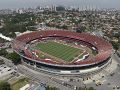
Morumbi Stadium
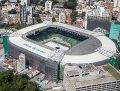
Allianz Parque
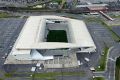
Arena Corinthians
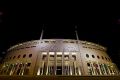
Pacaembu Stadium

.jpg)


Notes
- ↑ População do Brasil alcança marca de 213,4 milhões de habitantes, divulga IBGE Secretaria de Comunicação Social, August 28, 2025. Retrieved May 20, 2026.
- ↑ Edward J. Goodman, The Explorers of South America (University of Oklahoma Press, 1992, ISBN 978-0806124209).
- ↑ Julian Haynes Steward (ed.), Handbook of South American Indians (U.S. Government Printing Office, 1946).
- ↑ Caroline Domanoski, Free tour at historical Jesuit church and school Places to Visit Brazil. Retrieved May 20, 2026.
- ↑ Marcus Lopes, Há 95 anos, bombas caíam sobre São Paulo e arrasavam a cidade BBC News Brasil, August 11, 2019. Retrieved May 20, 2026.
- ↑ Caíque Alencar, Despoluição do rio Pinheiros pode ser entregue no 1º semestre de 2022 Veja, December 23, 2021. Retrieved May 20, 2026.
- ↑ Phillippe Watanabe, Tietê River registers an increase in good water and a decrease in the pollution stain Folha de SPaulo September 21, 2021. Retrieved May 20, 2026.
- ↑ João Fellet, Antes dos portugueses, SP teve floresta tropical, Cerrado e mini-Pantanal BBC News Brasil, February 24, 2018. Retrieved May 20, 2026.
- ↑ Parque Nacional Jaragua UNESCO World Heritage Convetion. Retrieved May 20, 2026.
- ↑ Informações sobre as Estações do Ano na Cidade de São Paulo Estação Meteorológica do IAG/USP. Retrieved May 20, 2026.
- ↑ Jeffrey Lesser, A Discontented Diaspora: Japanese Brazilians and the Meanings of Ethnic Militancy, 1960–1980 (Duke University Press, 2007, ISBN 978-0822340812).
- ↑ Archdiocese of São Paulo Catholic-Hierarchy. Retrieved May 21, 2026.
- ↑ Secretaria Municipal das Subprefeituras Prefeitura Municipal de São Paulo. Retrieved May 23, 2026.
- ↑ 14.0 14.1 14.2 Teresa P. R. Caldeira, City of Walls: Crime, Segregation, and Citizenship in São Paulo (University of California Press, 2000, ISBN 978-0520221437).
- ↑ 15.0 15.1 Mary Webb (ed.) Jane's Urban Transport Systems 2011-2012 (Janes Information Group, 2011, ISBN 0710629540).
- ↑ São Paulo Tramz. Retrieved May 23, 2026.
- ↑ Arthur Dapieve, BRock: O rock brasileiro dos anos 80 (Editora 34, 1995, ISBN 8573260084).
- ↑ 18.0 18.1 18.2 noicols, Culture São Paulo, July 12, 2013. Retrieved May 23, 2026.
- ↑ História do Estádio do Morumbi Estadiodo Morumbi. Retrieved May 23, 2026.
ReferencesISBN links support NWE through referral fees
- Caldeira, Teresa P.R. City of Walls: Crime, Segregation, and Citizenship in São Paulo. University of California Press, 2000. ISBN 978-0520221437
- Dapieve, Arthur. BRock: O rock brasileiro dos anos 80. Editora 34, 1995. ISBN 8573260084
- Goodman, Edward J. The Explorers of South America. University of Oklahoma Press, 1992. ISBN 978-0806124209
- Lesser, Jeffrey. A Discontented Diaspora: Japanese Brazilians and the Meanings of Ethnic Militancy, 1960–1980. Duke University Press, 2007. ISBN 978-0822340812
- Steward, Julian Haynes (ed.). Handbook of South American Indians. U.S. Government Printing Office, 1946. ASIN B00D1MSISU
- Webb, Mary (ed.). Jane's Urban Transport Systems 2011-2012. Janes Information Group, 2011., ISBN 0710629540
External links
All links retrieved May 20, 2026.
- São Paulo Lonely Planet
- São Paulo Visit Brasil
- The History of Sao Paulo ThoughtCo.
- A guide to São Paulo, the Brazilian city defined by its creative subcultures National Geographic
- Sao Paulo 7Wonders
Credits
New World Encyclopedia writers and editors rewrote and completed the Wikipedia article in accordance with New World Encyclopedia standards. This article abides by terms of the Creative Commons CC-by-sa 3.0 License (CC-by-sa), which may be used and disseminated with proper attribution. Credit is due under the terms of this license that can reference both the New World Encyclopedia contributors and the selfless volunteer contributors of the Wikimedia Foundation. To cite this article click here for a list of acceptable citing formats.The history of earlier contributions by wikipedians is accessible to researchers here:
The history of this article since it was imported to New World Encyclopedia:
Note: Some restrictions may apply to use of individual images which are separately licensed.

