Main Page
From New World Encyclopedia
New World Encyclopedia integrates facts with values. Written by certified experts.
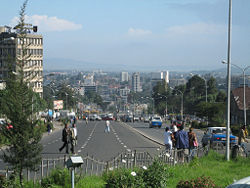
Featured Article: Addis Ababa
Addis Ababa is the capital city of Ethiopia and the African Union and is often called the "African Capital" due to its historical, diplomatic, and political significance for the continent. The headquarters of the African Union and the United Nations Economic Commission for Africa can both be found in the city. Located in the foothills of the Entoto Mountains and standing 7,726 feet (2,355 meters) above sea level, it is the third highest capital in the world. It is located in the geographic center of the country. This historically significant city in its enchanting mountain setting is recognized as one of the world¹s most problematic, yet fascinating and beautiful cities.
Popular Article: Peace Corps
The Peace Corps is an independent United States federal agency. The Peace Corps was established by Executive Order 10924 on March 1, 1961 signed by President John F. Kennedy, and authorized by Congress on September 22, 1961, with passage of the Peace Corps Act (Public Law 87-293).

Did you know?
Rwanda is known as the "Land of a Thousand Hills" (source: Rwanda)


